
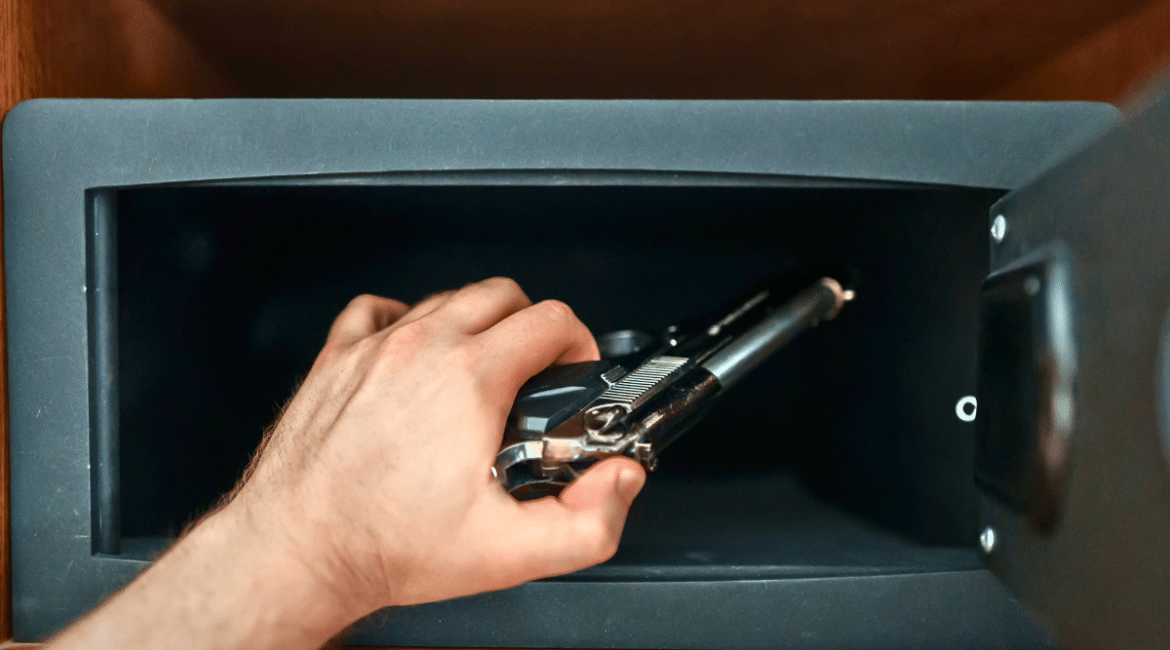
- TL;DR: Safe firearm storage can help reduce access to weapons when someone is experiencing a mental health challenge, without framing it as “taking away” guns.
- If you need immediate assistance, call or text 988, the Suicide & Crisis Lifeline.
What do you do with your firearms if you or someone you know is struggling with their mental health? Safe storage is a great first step.
It’s important to make sure the person experiencing the mental health challenge knows their guns are not being taken away. Keep the conversation focused on safe storage.
Why Should Someone in a Mental Health Crisis Not Have Access to Firearms?
Reducing access to weapons is important when someone is experiencing a mental health challenge.
During periods of intense emotional distress, creating some distance from lethal means can give a person time for the intensity of the moment to pass and for supportive resources to become available.
Mental Health America, citing the CDC, reports that people living in rural settings are at higher risk of suicide. Some of the reasons for this, per Rural Health Information Hub, include:
- A shortage of mental health providers in the area.
- Longer travel time to receive mental health treatment.
- Lower incomes, making mental health care more difficult to afford.
- Social isolation.
- Easy access to guns.
- High stress for farmers and ranchers due to unpredictable weather and health threats to both crops and livestock.
What Does Safe Firearm Storage Look Like?
- This means storing firearms in a locked location and unloaded (stored separately from ammunition).
- Another option, disassembling the gun and storing the key components away from each other.
- Giving the keys to your gun cabinet or ammunition lockbox to a trusted friend, neighbor, or family member. Laws on firearm storage and transfer vary by state; check local regulations, or ask your mental health provider, before relying on this option.
- Look for specialized programs in your area that store guns for free or a low price. For example, some communities have a “Store My Gun” project. Some local firearms dealers also offer temporary storage.
Having some of these practices already in place helps make firearms safety a habit rather than a concern or punishment.
How Can Rural Patients Access Additional Support During a Mental Health Struggle?

Rural Psychiatry Associates has an enhanced focus on helping rural communities. Through telemedicine, our trained professionals can offer care through a smart device, such as a cell phone, tablet, or desktop or laptop computer.
Utilizing video call technology reduces how far our patients have to travel to find care.
For those in small communities, having a virtual option also helps keep appointments private because patients don’t have to worry about someone in town seeing them walk into a clinic.
Your mental health matters. If you need immediate assistance, call or text 988, the Suicide & Crisis Lifeline.
FAQs
Is asking someone to store their guns away controlling?
No. It’s all in how you ask. Take a requesting tone. “I’d feel safer if guns were locked away while I’m here. Is that something you can do?”
Try to approach the conversation with curiosity rather than assumptions. The goal is to understand what the person needs while working together on a plan that keeps everyone safer.
What if I don’t own a gun but I’m worried about a family member?
Voice your concerns but in a way that gives them the control. “I’m worried about you and would feel better knowing your gun is unloaded and securely stored. Are you willing to lock it up or do you need help finding secure storage?”
How do I recommend someone talk with a mental health provider?
You can take a couple of approaches: “I’ve noticed you’ve been having a hard time lately. Do you think it might help if you talk with a mental health professional? I’d be happy to help you find someone if you want?”
If you need to be more direct: “I’m worried about you and I think talking with a mental health professional could offer some support. I’m not saying anything is wrong with you, I just don’t want you to have to handle this alone.”
If they aren’t ready to talk with a provider, you can continue checking in, listening without judgment, and reminding them that support remains available.